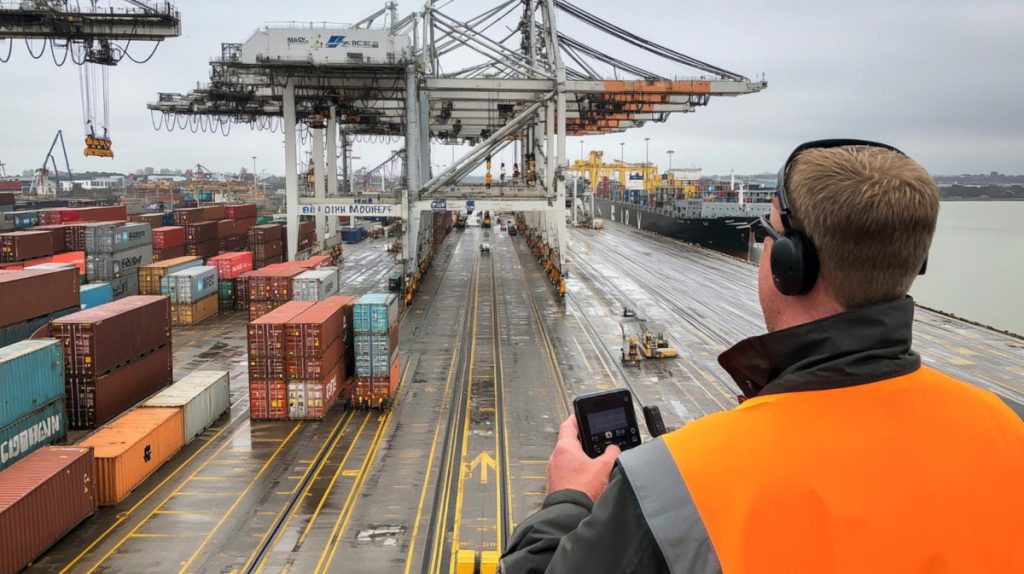
If you’re a small UK business importing goods from the EU and your shipment is arriving via Dover, it helps to know that Dover operates as a Ro-Ro (roll-on/roll-off) gateway with strict pre-lodgement and vehicle movement rules. That means most import paperwork — or at least the references to that paperwork — must be submitted before the vehicle can board the ferry. Getting your documents right before arrival will cut waiting times, prevent refused boarding and avoid fines.
Below is a practical, step-by-step guide to the documents you’ll need and how they are used in the clearance process.
Core documents you must have (and why)
- EORI number (Economic Operators Registration and Identification)
Every UK business importing or exporting must have an EORI number that starts with GB. If you don’t have one, you cannot make customs declarations — so apply on GOV.UK as soon as you decide to trade. The carrier or your customs agent will also ask for the exporter’s EORI if it’s an EU supplier. - Commercial invoice
This is the primary document HMRC uses to determine the value of the goods for duty and VAT. It must show seller and buyer details, a clear description of the goods, quantities, unit and total value, currency, Incoterms, and payment/transaction terms. Incomplete or inconsistent invoices are the most common cause of delays and queries. - Packing list
A detailed packing list helps customs and carriers match manifest data to the physical cargo (how many cartons, pallet breakdown, item weights). For multi-line shipments it speeds checks and inspections. - Transport document (CMR, Bill of Lading, Airway Bill or consignment note)
For road freight to Dover you’ll usually have a CMR consignment note or a carrier’s haulage paperwork. For sea freight there’s a Bill of Lading; for air, an Airway Bill. These prove the contract of carriage and are needed to release goods from the carrier. - UK import declaration / MRN (Movement Reference Number) — submitted via CDS
Imports into Great Britain require a customs declaration submitted to HMRC’s Customs Declaration Service (CDS). Once submitted, you receive an MRN — this reference is frequently required to create a Goods Movement Reference (GMR) used by GVMS at Dover. If you use a customs agent, they will usually submit this on your behalf. - Goods Movement Reference (GMR) — GVMS booking for Ro-Ro
Dover is one of the UK ports that uses the Goods Vehicle Movement Service (GVMS). Under “pre-lodgement”, vehicles need a GMR (which links your MRN and associated references) before boarding. Without a valid GMR, drivers will not be allowed to load and the ferry operator will refuse the vehicle. Plan your submission timing carefully — declarations must be completed early enough to generate the GMR. - Entry summary / Safety & Security declaration (ENS / S&S GB)
The UK requires an entry safety and security declaration for most imports. Rules for EU-to-GB shipments have changed over time, and waivers have been applied in the past; in practice you should assume a safety & security declaration will be required and confirm current HMRC guidance for specific goods and dates. These declarations are separate from the import customs declaration and are used for risk assessment.
Other possibly required documents (depending on the goods)
- Certificates of origin (or preferential origin documents such as EUR.1) — needed if you plan to claim preferential duty rates under a trade agreement.
- Import licences or permits — for controlled goods (e.g., chemicals, firearms, some telecoms equipment, dual-use goods).
- Sanitary / phytosanitary certificates — for food, plants and animal products; these are often required at the border and may need pre-notifying the relevant UK authority.
- Safety data sheets (SDS) — for certain hazardous goods.
- Authorisations for special procedures — if you want to use customs regimes such as inward processing, temporary admission, or customs warehousing.
Always check whether your commodity code and the nature of your goods trigger any of the above restrictions or certificates before shipping. Practical steps for a smooth clearance at Dover
- Get your EORI now, if you don’t have one. It’s the gateway to everything else.
- Classify your goods correctly (HS/commodity codes) — duties and licences depend on this. If you’re unsure, seek a tariff classification ruling or ask your customs broker.
- Prepare accurate commercial invoices and packing lists and make sure the descriptions match the declaration. Avoid handwritten invoices.
- Decide who will submit the import declaration — you can do it yourself using HMRC-authorised software and CDS, or appoint a customs agent/broker. For first imports, an agent will usually save you time and prevent errors.
- Pre-lodge early so you can obtain the MRN and create the GMR for GVMS before the vehicle reaches the port; check the ferry/haulage operator’s cut-off times. Dover operates strict pre-lodgement rules for Ro-Ro traffic.
- Check safety & security requirements for the commodity and confirm whether a waiver applies for your shipments (policy updates have occurred in recent years — always check current HMRC guidance).
- Retain records — HMRC requires import records to be kept (commonly six years) in case of audit.
- Plan for duty and VAT — decide whether you will pay immediately or use a deferment account. Small businesses sometimes use deferred payment facilities via a customs broker to help cash flow.
Who can help, and when to use an agent
Customs procedures change and can be technical. If you don’t want to manage CDS software, GVMS/GMR processes, or licences yourself, engage a customs broker or freight forwarder experienced with Dover. They’ll submit the import declaration, get the MRN, create the GMR for GVMS, check licences and advise on duty/VAT reliefs or authorisations. For many small businesses that import occasionally, the cost of an agent is offset by avoiding delays, fines and incorrect duty payments.
Quick document checklist for imports via Dover
- EORI (GB) — required.
- Commercial invoice (accurate and detailed).
- Packing list.
- Transport paperwork (CMR/Bill of Lading/Airway Bill).
- Import declaration submitted in CDS → MRN.
- Goods Movement Reference (GMR) via GVMS (pre-lodgement for Ro-Ro).
- Entry summary / Safety & Security declaration (check current requirements).
- Any licence, certificate of origin, or sanitary/phytosanitary paperwork (if applicable).
Final tips
Start preparing documents well before shipment. Confirm the carrier and ferry operator cut-offs for GVMS/GMR and ensure your driver has the GMR on their phone or printout. Keep electronic copies of every document and log dialogue with your supplier so you can resolve discrepancies quickly. If your goods are time-sensitive (perishables, retail seasonal items), plan for potential checks — building a buffer into your transit time will reduce stress.
If you’d like, I can create a printable one-page checklist tailored to your product type (e.g., electronics, clothing, food) and guide you through EORI registration or a short template for a compliant commercial invoice.
Sources & further reading (official guidance): HM Revenue & Customs — “Import goods into the UK” and related pages on CDS, GVMS and entry summary (safety & security).
To ensure your customs clearance process is as smooth and efficient as possible, consider partnering with a reputable customs broker. Connect with a trusted broker today to simplify your import process and gain peace of mind. Feel invited to contact the DCP Logistics Group from London. Our broker work also in Dover Port.